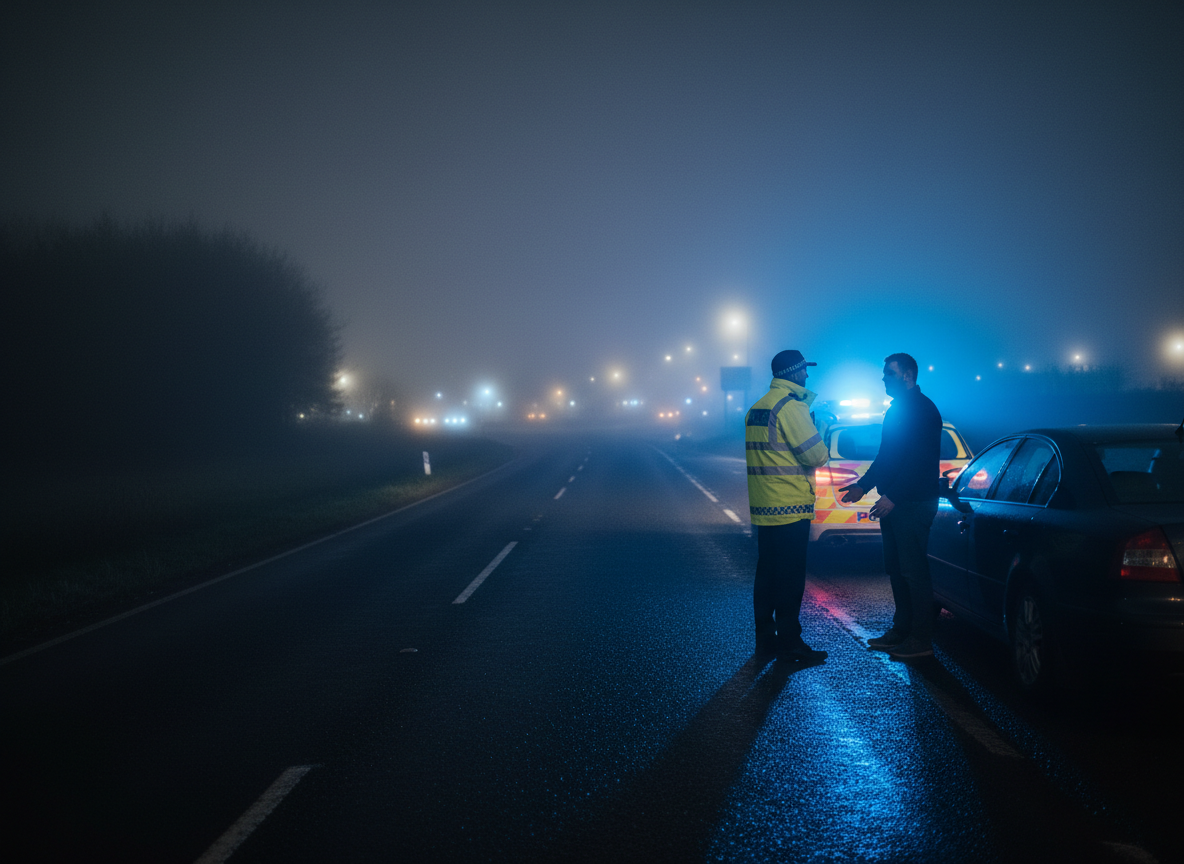
Driving While Using A Mobile Phone: A Complete Guide
Using A Mobile Phone While Driving: The Complete Guide to the Law, Penalties and Possible Defences
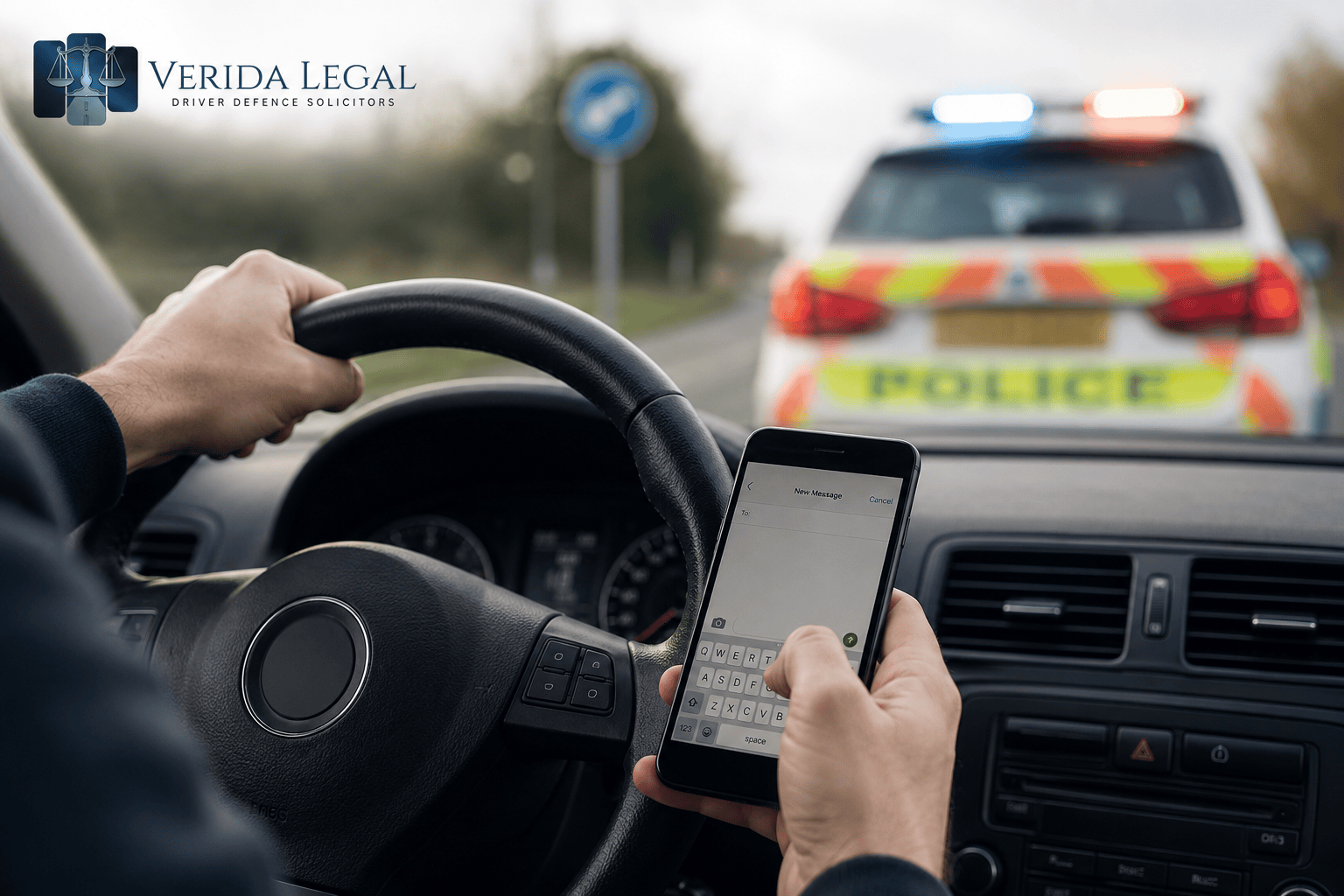
Pulled over for using your mobile phone? Our specialist motoring solicitors explain the law, police investigations, possible defences and what happens next.
Few motoring offences have changed as significantly in recent years as the offence of using a mobile phone while driving.Despite the law being updated in 2022, many motorists remain unsure about what is actually prohibited.
- Can you change your music?
- Can you use sat nav?
- Can you touch your phone while stopped at traffic lights?
- What if the engine is still running?
- Does simply holding a phone amount to an offence?
These are questions our solicitors are asked regularly.
At Verida Legal, we represent motorists across England and Wales accused of a wide range of road traffic offences, including allegations of using a hand-held mobile phone while driving.
Many clients are surprised to discover that the offence is considerably broader than they expected. Others assume that because they were only stationary for a few seconds, or because they never made a phone call, they cannot have committed an offence. The reality is more nuanced.
This guide explains:
- what the law actually says;
- what counts as "using" a mobile phone;
- when a vehicle is considered to be driving;
- the exceptions to the offence;
- how police investigate these allegations;
- common misconceptions;
- possible legal issues that may arise; and
- why obtaining specialist legal advice can be important, particularly where a conviction may lead to a driving disqualification.
Our aim is to explain the law accurately and in plain English so that drivers understand both their legal obligations and the issues that may arise if they are accused of an offence.
PART ONE: AN INTRODUCTION TO THE MOBILE PHONE OFFENCE
What Is the Mobile Phone Offence?
The offence is created by the Road Traffic Act 1988 and the Road Vehicles (Construction and Use) Regulations 1986, which make it an offence to use a hand-held mobile telephone or other specified interactive communication device while driving, except in limited circumstances.
The law was amended in 2022 to clarify and broaden the activities that are prohibited. As a result, the offence now extends beyond making telephone calls or sending text messages.
Today, the legislation captures many forms of interaction with a hand-held mobile phone while driving.
Understanding precisely what amounts to "use" is often one of the first questions motorists ask.

Why Was the Law Changed?
For many years, prosecutions focused on the use of mobile phones for interactive communication, such as making calls or sending messages. As technology evolved, mobile phones became capable of performing countless other functions, including:
- taking photographs;
- recording video;
- browsing the internet;
- streaming media;
- using applications;
- making contactless payments; and
- accessing documents.
This led to uncertainty about whether some forms of phone use fell within the existing legislation. The 2022 amendments were introduced to remove much of that uncertainty by making it clear that drivers should not use a hand-held mobile phone while driving for almost any purpose unless a specific legal exception applies.
What Does "Using" a Mobile Phone Mean?
One of the biggest misconceptions is that the offence only applies if somebody is making a telephone call. That is no longer the case.
Depending upon the circumstances, using a hand-held mobile phone may include activities such as:
- sending or reading messages;
- checking notifications;
- browsing websites;
- scrolling through applications;
- recording photographs or video;
- selecting music or podcasts;
- searching for contacts;
- entering information;
- or interacting with applications.
The precise circumstances always matter. The prosecution must still prove the elements of the offence. However, the law is now considerably broader than many motorists realise.
What Is a "Hand-Held" Mobile Phone?
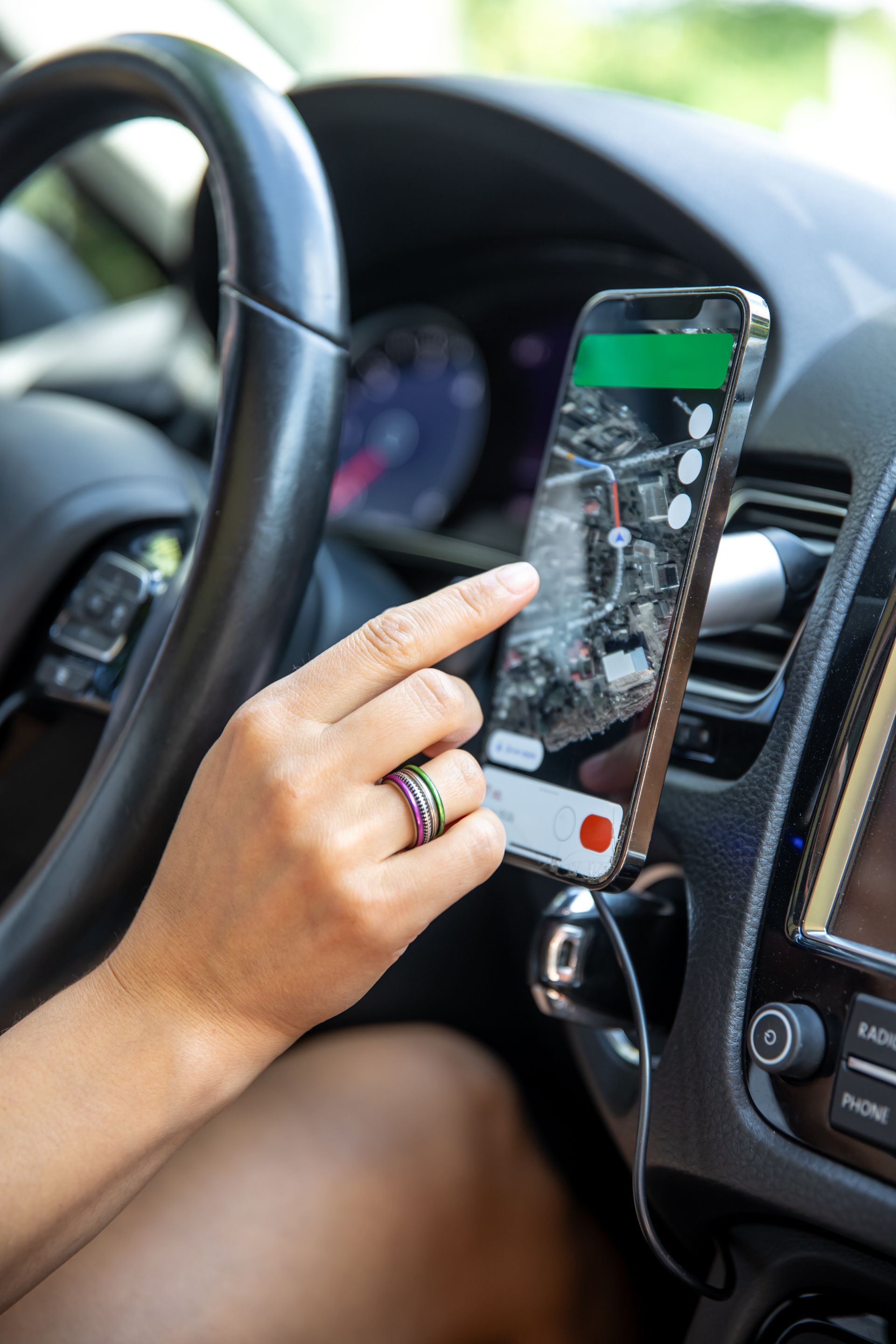
The legislation specifically refers to a hand-held device.Broadly speaking, a device is hand-held if it is, or must be, held while being used for the relevant purpose.
This distinction is important.
For example, many vehicles now contain integrated infotainment systems that can perform functions similar to a smartphone. Likewise, many drivers lawfully use mobile phones mounted in approved cradles.
Whether an offence has been committed will depend upon precisely how the device was being used and the facts of the individual case.
Simply because a mobile phone is present inside a vehicle does not automatically establish an offence.
What Does "Driving" Mean?
Many motorists assume that if the vehicle is stationary, they cannot be committing the offence. That is not necessarily correct.
The concept of "driving" is wider than many people appreciate. For example, questions may arise where a vehicle is:
- waiting at traffic lights;
- stationary in slow-moving traffic;
- temporarily stopped in a queue;
- or paused because of congestion.
In contrast, different considerations may apply where a vehicle has been safely parked and is no longer being driven. The precise facts are often important because every situation is different, assumptions should be avoided.
Can You Use a Phone at Traffic Lights?
This is one of the most frequently searched questions on the internet. The answer surprises many drivers.
Stopping temporarily because traffic lights are red does not necessarily mean that you have stopped driving for the purposes of the legislation. Although the vehicle may not be moving, it remains part of the flow of traffic and will usually continue its journey once the lights change.
For that reason, motorists should avoid assuming that red traffic lights provide an opportunity to check messages, change applications or otherwise handle a mobile phone.
Does the Engine Have to Be Running?
Another common misconception is that the offence only applies where the engine is switched on. The legal position is not determined solely by whether the engine is running. Instead, the court will consider all of the surrounding circumstances when determining whether a person was driving.
This is another reason why motorists should be cautious about relying upon information found on social media or internet forums.
How Do Police Detect Mobile Phone Offences?
Unlike speeding offences, there is usually no automated device that records a driver using a hand-held mobile phone. While there are static cameras now capable of detecting the use of a mobile phone by drivers, the majority of cases start off differently.
Investigations commonly begin when an officer personally observes the alleged offence. For example, an officer may believe they have seen a driver:
- holding a phone near the steering wheel;
- looking down repeatedly into their lap;
- interacting with a screen;
- or manipulating a hand-held device while the vehicle is moving.
Increasingly, investigations may also involve:
- dashcam footage;
- body-worn video;
- CCTV;
- roadside enforcement operations;
- and evidence from members of the public.
The evidence available will depend upon the circumstances of the individual case.
More Than Just a Fixed Penalty
Many people assume that a mobile phone allegation simply results in a fixed penalty notice. In reality, the consequences can be much more significant. Whilst many cases are dealt with by way of a fixed penalty, others proceed to court.
This may occur because:
- the allegation is disputed;
- a fixed penalty is not appropriate;
- the driver already has points on their licence;
- or the offence could lead to disqualification under the totting-up provisions.
For some motorists—particularly professional drivers or new drivers—the outcome of a conviction may be far more serious than the initial allegation suggests.
PART TWO: INSIDE THE INVESTIGATION
How Do Police Investigate Mobile Phone Offences?
Many motorists are surprised to learn that most mobile phone prosecutions do not begin with sophisticated technology. Instead, they often begin with a simple observation made by a police officer.
An officer may believe they have seen a driver holding or using a hand-held mobile phone whilst driving and decide to stop the vehicle.
Although some cases are straightforward, others depend upon careful examination of exactly what was observed, what the driver was doing and what evidence is available to support the allegation. Understanding how these investigations are conducted helps explain why every case should be considered on its own facts..

Police Observations
In many cases, the prosecution is based primarily upon what the officer saw. For example, an officer may report observing a driver:
- holding a mobile phone;
- looking repeatedly down towards their lap;
- tapping or swiping a screen;
- raising a phone towards their face;
- interacting with an application; or
- using a device whilst the vehicle was moving.
The officer will usually record these observations in their notebook or witness statement. Those observations often become an important part of the prosecution evidence.
However, as with all criminal proceedings, the court considers the evidence as a whole rather than relying upon a single factor in isolation.
Dedicated Mobile Phone Enforcement Operations
Police forces across England and Wales regularly carry out operations specifically targeting distracted driving.
These enforcement campaigns may involve:
- marked patrol vehicles;
- unmarked police vehicles;
- officers positioned on bridges overlooking motorways;
- motorcycle officers;
- roadside observation points; and
- joint operations with road safety teams.
The purpose of these operations is to identify drivers who may be placing themselves and others at risk by using hand-held devices while driving. Because officers are specifically looking for these offences, motorists are often stopped shortly after the alleged incident.
Unmarked Police Vehicles
Some drivers are surprised to discover that the officer who stopped them was travelling in an unmarked police vehicle. There is nothing unusual about this. Unmarked vehicles are commonly used during roads policing operations.
Their advantage is that drivers are often less likely to alter their behaviour simply because they have seen a marked police car. An officer travelling alongside or behind another vehicle may therefore have a clear opportunity to observe whether a driver appears to be holding or using a mobile phone.
Body-Worn Video
Many police officers now wear body-worn video cameras. Once a vehicle has been stopped, these cameras may record:
- the conversation with the driver;
- any explanation given;
- what is visible inside the vehicle;
- the circumstances following the stop.
Body-worn video can become an important source of evidence during criminal proceedings. It may provide useful context about the interaction between the officer and the driver and can sometimes assist the court in understanding the circumstances of the allegation.
Dashcam and CCTV Footage
Increasingly, investigations may also involve video evidence.
Potential sources include:
- police dashcams;
- dashboard cameras fitted to other vehicles;
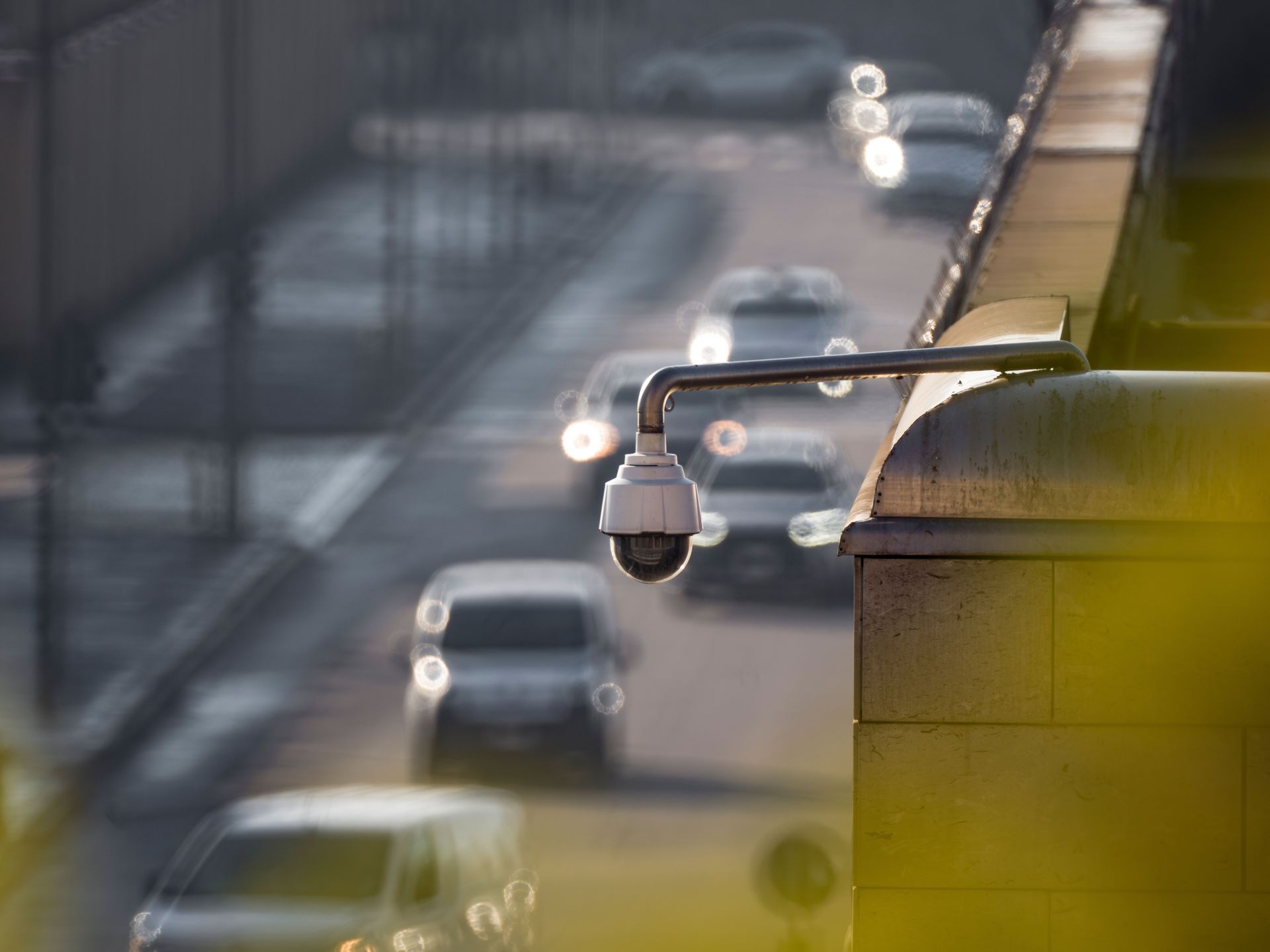
- local authority CCTV;
- commercial premises;
- and footage provided by members of the public.
Video evidence can be particularly helpful where it captures the relevant part of the incident. However, as with any evidence, it should be considered carefully.
A camera angle may not show everything taking place inside a vehicle.
Similarly, poor image quality or distance from the vehicle may affect what can reliably be seen. For that reason, video evidence is often considered alongside witness evidence rather than in isolation.
Can Mobile Phone Records Be Used?
One question drivers often ask is whether the police will automatically obtain their mobile phone records. The answer depends upon the circumstances of the investigation.
In many straightforward roadside cases, the prosecution will rely primarily upon the officer's observations.
In more complex cases, additional enquiries may be made where they are considered necessary and proportionate. In our experience, mobile phone records are usually sought by the defence when trying to prove the officer's observation is incorrect (e.g. the officer alleges a call was being made).
Whether mobile phone records are relevant will depend upon the issues arising in the particular case.It is important to remember that using a phone is not limited to making or receiving calls. The absence of a telephone call at the relevant time does not necessarily determine whether an offence has been committed.
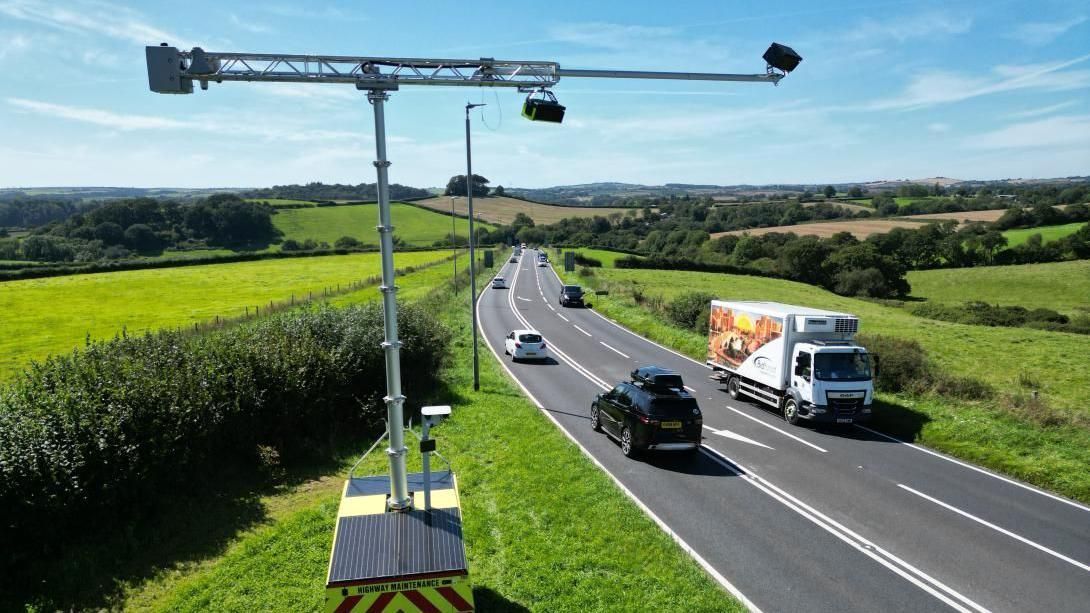
AI Enforcement Cameras
In recent years, a number of police forces have trialled or introduced camera technology capable of identifying potential mobile phone use by drivers.
These systems use artificial intelligence to analyse images of passing vehicles and identify those that may warrant further review by enforcement officers.
The technology does not always determine guilt. Instead, it assists in identifying vehicles that may require human assessment before any enforcement action is taken.
As this technology continues to develop, motorists can expect it to play an increasingly important role in road traffic enforcement.
However, any prosecution must still be supported by admissible evidence capable of proving the offence.
What Happens After You Are Stopped?
Once a vehicle has been stopped, the officer will usually explain the reason for the stop and speak with the driver about the allegation.
Depending upon the circumstances, the matter may be dealt with in a number of ways. These include:
- words of advice;
- a fixed penalty notice;
- a report for summons or postal requisition;
- or, in some cases, no further action.
The outcome will depend upon the individual circumstances and the evidence available.
Fixed Penalty or Court?
Many mobile phone offences are dealt with by way of a fixed penalty.
However, court proceedings may be appropriate where:
- the allegation is disputed;
- the driver is not eligible for a fixed penalty;
- accepting a fixed penalty would lead to disqualification under the totting-up provisions;
- or there are other aggravating features.
For some motorists, particularly professional drivers or those who already have penalty points, the decision whether to accept a fixed penalty can have significant consequences.
Obtaining legal advice before making that decision is always sensible.
Why the Evidence Matters
Although mobile phone cases are often viewed as straightforward, the prosecution must still prove the offence.
Questions may arise concerning:
- what the officer actually observed;
- whether the device was hand-held;
- whether the driver was driving for the purposes of the legislation;
- whether the alleged activity falls within the offence; and
- whether the available evidence proves the allegation beyond reasonable doubt.
This does not mean that every case can be successfully defended. Many prosecutions are supported by clear and compelling evidence.
However, it does mean that every allegation should be considered on its own facts rather than assumptions. Many cases can be successfully defended.

The Importance of Early Legal Advice
One of the most common mistakes motorists make is assuming that a mobile phone allegation is "only six points."
For some drivers, six penalty points may have relatively limited consequences. For others, they may result in:
- revocation of a new driver's licence;
- disqualification under the totting-up provisions;
- difficulties with employment;
- increased insurance premiums; or
- wider professional consequences.
Understanding the potential impact at an early stage allows informed decisions to be made about how the case should proceed.
What Happens Next?
Although the investigation may appear relatively straightforward, many mobile phone cases turn on a surprisingly small number of factual issues.
- Was the phone actually being held?
- Was the driver using it in the way alleged?
- Was the vehicle being driven at the relevant time?
- Does the available evidence establish the offence?
These are often the questions that determine the outcome of the case.
In the next part of this guide, we examine the most common misconceptions surrounding the offence, explain what activities are and are not prohibited under the current law, and explore some of the legal issues that frequently arise in contested proceedings.
PART THREE: THE LEGAL PERSPECTIVE
Common Misconceptions About Mobile Phone Offences
One of the reasons mobile phone offences cause so much confusion is that many drivers are relying on outdated information.
Before the law changed in 2022, much of the discussion centred around making telephone calls or sending text messages. Although that explains why some misconceptions continue to circulate online, the law has since been expanded. As a result, many motorists are surprised to discover that conduct they believed was lawful may now amount to an offence.
Understanding what the law does—and just as importantly, what it does not prohibit—is often the first step in assessing any allegation.
Myth 1: "I Wasn't Making a Call, So I Can't Be Guilty."
This is probably the most common misconception.
Under the current law, the offence is no longer limited to making telephone calls or sending messages. The legislation applies to a wide range of interactions including:
- selecting music;
- opening an application;
- reading a notification;
- taking a photograph;
- recording a video;
- searching for information; or
- otherwise interacting with the device while holding it.
Whether an offence has been committed will always depend on the facts and the evidence available.
Myth 2: "I Was Stationary, So I Wasn't Driving."
Another common misunderstanding is that the offence only applies when a vehicle is moving.
A vehicle may still be regarded as being driven even though it has come to a temporary stop.
Examples include:
- waiting at temporary traffic lights;
- stationary traffic queues;
- roadworks;
- congestion;
- or waiting to enter a roundabout.
In contrast, different considerations may apply where a driver has safely parked and the journey has genuinely come to an end. The distinction is important because every situation turns upon its own circumstances.
Myth 3: "The Officer Only Saw Me for a Second."
Some drivers assume that because an officer only observed them briefly, the allegation cannot be proved.
Length of observation is one factor the court may consider. However, there is no minimum period for which an officer must observe a driver before evidence can be relied upon.
Instead, the court will consider:
- what the officer says they observed;
- the clarity of those observations;
- whether there is supporting evidence;
and whether the prosecution has proved the offence beyond reasonable doubt.
Myth 4: "I Was Only Moving My Phone."
Drivers sometimes explain that they were not using their phone but were simply picking it up or moving it.
The prosecution must establish the elements of the offence created by the legislation.
For example, if the phone was moved while the screen was off and it remained that way, the prosecution may be unable to prove the phone was "used". However, if the screen illuminated while it was being moved, this is one of the examples set out in the legislation that would fall under the definition.
Rather than making assumptions, it is necessary to examine the available evidence carefully.
The Importance of What Was Actually Observed
Mobile phone cases often turn on a relatively straightforward question: What exactly did the officer see? For example:
- Was the driver definitely holding a phone?
- Could another object have been mistaken for a mobile device?
- What was the officer's viewing angle?
- How long was the observation?
- Was the driver's hand clearly visible?
- Were lighting or weather conditions relevant?
These questions are not intended to suggest that officers are routinely mistaken. Rather, they illustrate why criminal cases are determined by evidence rather than assumptions. The court must decide what happened after considering all of the available material.
Admissions at the Roadside
Many drivers are understandably nervous when stopped by the police. In some cases, they may make comments such as:
- "I was only changing my music."
- "I only looked at it for a second."
- "I was just checking a notification."
- "I picked it up because it fell."
Although these comments are often made honestly and without legal advice, they may later form part of the prosecution evidence.
For that reason, it is sensible to remain polite and cooperative while recognising that anything said to the police may later be relied upon in court. Being co-operative does not mean you have to make admissions to the offence. You can be polite to the police while also refusing to answer questions.

Does Every Allegation Have a Defence?
No. It is important to be realistic.
Many mobile phone allegations can be defended successfully. However, there are those in which the evidence is strong. Every criminal allegation should be considered individually.
A specialist solicitor will carefully review:
- the officer's evidence;
- any video footage;
- witness statements;
- the circumstances of the stop;
- and any explanation provided by the driver.
Only after considering all of the evidence is it possible to provide informed legal advice..
The Basis Of Plea: A Plan B?
While our solicitors have successfully defended many mobile phone offences, not every single case results in acquittal. In some cases, it is necessary to consider other options. However, that does not automatically mean just accepting the offence and taking 6 penalty points.
Under the same legislation as the mobile phone offence, there is a separate offence of driving without proper control of the vehicle. This is an offence that carries 3 penalty points instead of 6, and holds a useful alternative to just giving up.
Instead of pleading guilty to the mobile phone offence, there is the option of trying to negotiate with the prosecution by offering a plea to this lesser offence. This way, the prosecution achieves a conviction and you receive fewer penalty points. This option can be useful in circumstances where you currently have 6 points on your licence (so would avoid accumulating 12).
Our solicitors have successfully negotiated a basis of plea in many cases over the years. Our first approach is always to try to defend the case where we can. However, a successfully negotiated basis of plea can also result in a successful outcome.
Every Case Depends on Its Own Facts
Perhaps the most important point to remember is that no two mobile phone cases are identical.
One case may turn on a clear admission made by the driver.
Another may depend entirely upon the officer's observations.
A third may involve body-worn video or CCTV that provides additional context.
For that reason, it is rarely helpful to compare one case with another. Instead, each allegation should be assessed on its own evidence and in accordance with the law.
What Happens Next?
By this stage, you should have a clearer understanding of how the offence operates, how police investigate allegations and why apparently straightforward cases often depend on careful examination of the evidence.
In the final part of this guide, we answer the questions our solicitors are most frequently asked, explain the penalties that may follow a conviction, discuss the impact on new and experienced drivers, and outline how Verida Legal assists motorists accused of mobile phone offences.
PART FOUR: CHARGED WITH A MOBILE PHONE OFFENCE?
What Happens After You Are Accused of Using a Mobile Phone While Driving?
For many drivers, the most stressful part of the process begins after they have been stopped by the police.
Questions about penalty points, losing a driving licence, attending court and the effect on employment often become immediate concerns.
Understanding what happens next can help motorists make informed decisions and avoid relying upon inaccurate information found online.
Will I Receive a Fixed Penalty Notice?
Many mobile phone offences are dealt with by way of a fixed penalty. However, not every case is suitable for a fixed penalty notice.
Whether one is offered will depend upon the circumstances of the allegation and whether the driver is eligible to accept one.
In some situations, the matter may instead proceed directly to court. This may occur, for example, where:
- the allegation is disputed;
- the driver is not eligible for a fixed penalty;
- accepting the fixed penalty would result in disqualification under the totting-up provisions; or
there are other reasons why court proceedings are considered appropriate.

What If My Case Goes to Court?
If court proceedings are commenced, the prosecution must prove the offence. The court will consider all of the available evidence, which may include:
- the officer's witness statement;
- notebook entries;
- body-worn video;
- dashcam footage;
- CCTV;
- photographs;
- and any admissions made by the driver.
If the allegation is contested, both the prosecution and the defence will have the opportunity to present evidence and make legal submissions before the court reaches its decision.
Can I Lose My Driving Licence?
Many motorists assume that because the offence is "only" a mobile phone allegation, they cannot lose their licence. That is not always the case.
For example, drivers may face disqualification if:
- they accumulate 12 or more penalty points under the totting-up provisions;
- they are a new driver whose licence may be revoked under the New Drivers Act following the accumulation of sufficient penalty points within the relevant probationary period; or
- the court decides that disqualification is the appropriate sentence in the circumstances of the case.
For drivers who rely upon their licence for work or family responsibilities, the consequences can be significant.
Will This Affect My Insurance?
A conviction for a mobile phone offence may affect motor insurance. Insurers commonly ask applicants to disclose motoring convictions when arranging or renewing a policy. The precise effect will vary depending upon the insurer and the individual circumstances.
Can It Affect My Employment?
For some people, the impact extends well beyond the court proceedings. A conviction may be particularly significant where:
- driving forms part of the person's employment;
- the employer requires a clean driving licence;
- regular disclosure of motoring convictions is required; or
- the individual works in a profession where driving standards are closely scrutinised.
Professional drivers, delivery drivers, sales representatives and many others may therefore wish to obtain legal advice before deciding how to deal with an allegation.
Frequently Asked Questions
Can I Use My Phone as a Sat Nav?
Many drivers lawfully use navigation applications. The important distinction is often how the device is being used. A phone securely mounted in a cradle is generally treated differently from a phone that is being held in the driver's hand. However, drivers should remember that even where a specific mobile phone offence is not committed, the manner of driving must always remain safe and attentive.
Can I Touch My Phone If It Is in a Cradle?
This is one of the most commonly asked questions. The answer depends upon the circumstances. The mobile phone legislation specifically concerns the use of hand-held devices. However, drivers should exercise caution. Even where the specific mobile phone offence is not committed, unsafe driving could potentially give rise to allegations of careless driving or other offences if a driver becomes distracted.
Can I Use Voice Commands?
Many modern vehicles and smartphones include voice-operated functions. Where those systems can be used without holding the device, they may reduce the need for physical interaction. Nevertheless, drivers remain responsible for ensuring that they maintain proper control of their vehicle and pay full attention to the road.
What If I Was Using Apple CarPlay or Android Auto?
Many newer vehicles allow drivers to access navigation, music and communications through integrated infotainment systems. Whether an offence has been committed will depend upon the particular facts, including whether the device itself was hand-held and how it was being used. Drivers should always ensure that any interaction with in-car technology is carried out safely and lawfully.
What If I Was Calling 999?
The legislation contains a limited exception allowing the use of a hand-held mobile phone to contact the emergency services in certain circumstances. Whether that exception applies will depend upon the facts of the individual case. Drivers should not assume that every emergency call automatically falls within the exception.
Can I Defend a Mobile Phone Allegation?
Every case depends upon its own evidence. Some allegations are supported by clear and compelling evidence.
Others require careful examination of:
- the officer's observations;
- body-worn video;
- CCTV;
- witness evidence;
- the circumstances of the stop; and
- the legal requirements of the offence.
Obtaining legal advice allows the evidence to be reviewed before important decisions are made.

How Verida Legal Can Help
At Verida Legal, our solicitors practise exclusively in criminal motoring law. Our solicitors regularly represent motorists accused of using a mobile phone while driving;
We understand that many clients are worried not only about penalty points but also about the wider consequences of a conviction.
Our approach is straightforward.
We carefully examine the evidence, explain the legal position in clear and practical terms, and provide honest advice about the options available. Our main priority is always trying to avoid a conviction where we can. In many cases, this is possible. However, we leave no stone unturned. By not considering all options available, you limit the ways you can achieve a successful outcome.
Related Verida Legal Material
You may also find the following pages helpful:
- Verida Legal: Exceptional Hardship
- Verida Legal Blog: Totting Up: What Is Exceptional Hardship?
- Verida Legal: Basis Of Plea
- Verida Legal: Using A Mobile Phone
Recent Posts